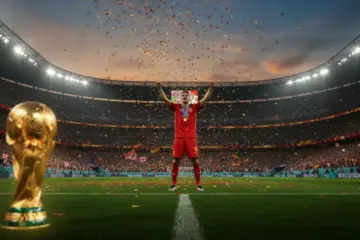
World Cup 2026 | Group G, Matchday 2
Sunday, June 21, 2026 — 3:00 p.m. ET | SoFi Stadium, Los Angeles
Watch in Canada: CTV, TSN, TSN+ | En français: RDS
Group G has reached the kind of early turning point that can define an entire tournament. Belgium and Iran meet at SoFi Stadium with every team in the section sitting on one point, and the winner will leave Los Angeles in the best possible position to control qualification. According to pre-match previews, Belgium enter as the favorite, but Iran’s resilience and set-piece quality make this far from a routine assignment.
For viewers in Canada, the timing is ideal: a Sunday afternoon start with real consequences, not just for the table but for the emotional temperature of the group. One team wants to assert itself as the leader of the pack; the other wants to prove that its opening draw was the start of something larger.
The Standings Make This a Pressure Match
Belgium, Iran, Egypt, and New Zealand are all level on one point after the opening round, which means there is no cushion for a second straight draw. The group remains wide open, and the margin for error is already thin.
| Team | Opening Record | Points | Immediate Read |
|---|---|---|---|
| Belgium | 0-1-0 | 1 | High-end talent, but not yet fully convincing |
| Iran | 0-1-0 | 1 | Hard to break down, dangerous when the game opens up |
| Egypt | 0-1-0 | 1 | Waiting for a decisive result later in the group |
| New Zealand | 0-1-0 | 1 | Still very much in the conversation |
That table tells the story clearly: no team has separated itself, and the first side to land a clean result can make the final matchday much simpler.
Belgium’s Case for Control
Belgium’s opening match showed why they are still viewed as the most complete team in the section, even if the performance did not fully match that reputation. They controlled the ball for long spells against Egypt, but they also needed a late tactical adjustment to get back into the game after falling behind to a sharp long-range strike.
Rudi Garcia’s most important move was introducing Romelu Lukaku, whose arrival immediately changed the feel of Belgium’s attack. Within seconds, his presence helped create the chaos that led to the equalizer. That kind of impact matters in a short group stage, where one substitution can reshape the entire standings picture.
- Kevin De Bruyne remains Belgium’s most important connector between midfield and attack.
- Romelu Lukaku gives Belgium a different attacking profile the moment he steps on the field.
- Belgium’s bench depth gives them more ways to alter the game if the plan stalls.
The key question is not whether Belgium can create chances. It is whether they can do it early enough to force Iran out of their preferred shell. The Opta preview and other Group G assessments both point to Belgium as the side most likely to advance, which is why this match carries extra weight: favorites are expected to turn control into points.
Why Iran Cannot Be Ignored
Iran’s opener was a reminder that they can absorb pressure, survive setbacks, and still find a way back into the match. They twice trailed New Zealand, yet twice responded to earn a 2-2 draw. That ability to recover gives them credibility against a stronger opponent.
The broader context also matters. Iran arrived in the tournament after a difficult build-up marked by visa complications and logistical disruption, but they still showed enough composure to handle a hostile, high-stakes environment. That experience may help them again in Los Angeles, where crowd energy could tilt heavily in their favor.
- Ramin Rezaeian was central to Iran’s comeback and remains a major threat from wide areas.
- Mohammad Mohebbi adds aerial presence and direct finishing power.
- Set pieces are one of Iran’s best routes to upsetting the rhythm of a stronger opponent.
Iran do not need to dominate possession to be dangerous. They need only enough territory to deliver quality balls into the box and enough patience to wait for Belgium to overcommit. That is a familiar underdog formula, but it remains effective when executed cleanly.
Matchups That Could Decide It
De Bruyne Against a Compact Block
Belgium’s best route forward runs through Kevin De Bruyne. If Iran can keep him from turning centrally and force him into predictable wide positions, they can slow the pace of Belgium’s attack. If he finds space between the lines, Belgium’s movement in the final third becomes much harder to manage.
Lukaku’s Starting Role
Lukaku’s short but dramatic appearance in the opener made his value impossible to ignore. If he starts, Belgium can attack more directly from the first whistle instead of waiting to change shape later. That matters against a team built to survive and then strike.
The Crowd Factor
SoFi Stadium is likely to feel more like a shared venue than a neutral one. Los Angeles has a large Iranian diaspora, and the atmosphere in Iran’s first match already suggested that this crowd can become an advantage for Team Melli. That noise can make Belgium’s possession game feel slower and more stressful than it should.
What the Numbers Suggest
Belgium remain the side most projection models trust to move on, with Opta’s pre-tournament simulations giving them the strongest odds of advancing from the group. At the same time, Iran’s chances are strong enough that this is not a situation where the favorite can expect a simple walkover.
That is what makes the matchup compelling: Belgium have more talent and better depth, but Iran have shown enough organization to keep the game within reach. If the match stays level into the second half, the pressure shifts sharply onto Belgium, who will be expected to force the issue.
Projected Flow and Result
The most likely pattern is straightforward. Belgium should have the ball more often, De Bruyne should touch it in useful spaces, and Lukaku should give the attack a more direct edge. Iran, meanwhile, will look to keep their shape tight, defend the middle of the field, and use Rezaeian’s delivery to create moments from nothing.
That combination points toward a match that is tense rather than open for long stretches. Belgium’s quality should eventually show, but only after they are made to work for it. A narrow win feels more believable than a comfortable one.
Predicted score: Belgium 2, Iran 1.
That result would move Belgium into a stronger position in Group G and leave Iran with everything still to play for in their final group match. For a section already locked on one point each, it would be the first real break in the deadlock.
Sunday’s full Group G schedule for Canadian viewers — all times Eastern:
- Tunisia vs. Japan — 12:00 p.m. ET
- Spain vs. Saudi Arabia — 12:00 p.m. ET
- Belgium vs. Iran — 3:00 p.m. ET
- Uruguay vs. Cabo Verde — 6:00 p.m. ET
- New Zealand vs. Egypt — 9:00 p.m. ET
All matches are available on CTV, TSN, and TSN+. French-language coverage is on RDS.