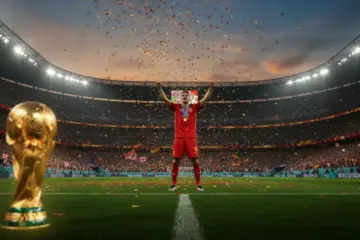
Iran arrives at the 2026 FIFA World Cup with real stability, a familiar core, and a clear target: survive the group stage for the first time in program history. The expanded tournament gives Team Melli a legitimate opening, but the path is still demanding and every detail, from logistics to selection, matters.
There was genuine uncertainty in the buildup because of a visa dispute involving the United States, one of the three host nations. FIFA approved a practical workaround that keeps Iran in the competition while limiting unnecessary disruption, so the team can continue preparing with the tournament itself, rather than off-field politics, as the main focus.
The Big Picture for Team Melli
Iran’s recent record in Asian qualifying has been impressive, and that matters because consistency is often the difference between merely qualifying and arriving with belief. Under Amir Ghalenoei, the squad has looked organized, compact, and difficult to break down, which is exactly the profile that can create problems in a short tournament.
What makes this campaign especially interesting is that Iran is not being asked to chase an unrealistic dream. The group is competitive, but it is not overwhelming, and that gives Iran a real chance to make history if it starts well.
Group Placement and What It Means
The draw sent Iran into Group G with Belgium, Egypt, and New Zealand. On paper, that creates a clear hierarchy, but the modern World Cup rarely follows paper logic for long.
Belgium brings the most established pedigree, Egypt offers physicality and tournament experience, and New Zealand is the side Iran will likely see as the most direct path to three points. That balance makes the first match especially important, because an opening result can shape confidence for the rest of the group phase.
Why the draw looks manageable
- Iran avoided the deepest possible group scenarios.
- New Zealand offers a realistic chance to start with points.
- Belgium and Egypt are difficult, but neither match is unwinnable.
- The expanded format keeps third-place qualification within reach.
Fixture List and Travel Reality
Iran’s schedule is built around three group matches in the United States, with two of them in Los Angeles. That concentration should help the team settle into a rhythm instead of constantly moving from one base to another.
| Match | Date | City | Importance |
|---|---|---|---|
| Iran vs. New Zealand | June 15 | Los Angeles | Best chance to open with points |
| Iran vs. Belgium | June 21 | Los Angeles | Toughest test in the group |
| Iran vs. Egypt | June 26 | Seattle | Potentially decisive for qualification |
That travel setup is more favorable than it first appeared. Iran is based in Tijuana for logistical reasons, which keeps the operational side manageable while preserving the team’s match schedule in the United States. The arrangement reduces uncertainty and gives the squad a more controlled environment before kickoff.
Coaching, Core Players, and Tactical Identity
Amir Ghalenoei brings experience and familiarity, both of which are valuable in a tournament where preparation time is limited. He has already overseen a strong qualifying run, and his team enters the finals with a clear structure rather than an identity still under construction.
The leadership group is anchored by Mehdi Taremi, Iran’s most important attacking figure and one of Asia’s most proven forwards. Around him, Iran has a blend of reliable veterans and domestic-based players who know each other well, which can matter as much as star power in tightly contested matches.
- Mehdi Taremi provides the main goal threat and the most international experience.
- Saman Ghoddos adds creativity and a link between midfield and attack.
- Alireza Beiranvand gives the team a trusted presence in goal.
- The overall squad profile favors familiarity, discipline, and compact defending.
What Iran Needs to Do to Advance
The formula is simple even if the execution is not. Iran probably needs to beat New Zealand, stay competitive against Belgium, and treat the Egypt match as a possible knockout game before the knockout rounds. That is a realistic route, but it requires patience and concentration across all 90 minutes.
Iran has often been respected for its structure and resilience, yet it has also been frustrated by narrow margins at major tournaments. This time, the draw and the tournament format give it an opening that previous teams did not always enjoy.
Latest Headlines Around the Camp
The main off-field storyline has been the visa issue, but the practical effect is that Iran has been able to keep preparing rather than get trapped in uncertainty. The squad’s planning camp and pre-tournament work have continued, and the federation has focused on ensuring the team arrives in North America ready to compete.
For supporters, the appeal is obvious: this is a national team with enough organization to frustrate stronger opponents and enough quality to punish mistakes. If Iran starts well, the first knockout-stage appearance in its World Cup history is not a fantasy but a genuine possibility.
For fans following the broader tournament picture, the official FIFA World Cup site remains the main source for schedule updates, match details, and competition news.

Why This Campaign Feels Different
Iran’s World Cup history has usually been defined by promise without breakthrough. That is why 2026 feels so significant: the group is workable, the squad is settled, and the team appears to have enough maturity to handle pressure moments better than in past cycles.
If Team Melli can turn early momentum into belief, it could finally change its tournament story. A strong start would not just improve qualification odds; it would transform the mood around the entire campaign.