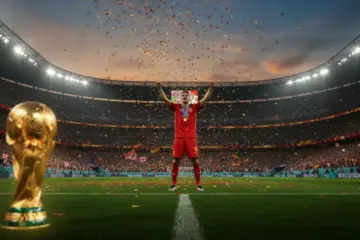
The 2026 FIFA World Cup will feel different from every edition that came before it. With Canada, Mexico, and the United States sharing hosting duties, the tournament will spread across a massive stage and test every contender in new ways.
For Canadian supporters, the event carries extra meaning. The dream will be to watch Canada make noise at home, but the wider conversation still centers on the global powers expected to control the bracket from start to finish.
Because the field has grown to 48 teams, the road to the trophy should be longer, stranger, and more demanding than ever. That also means the favorite pool is wider, with several nations bringing the talent, depth, and tournament habits needed to go all the way.
The Short List of Serious Champions
These are the teams that combine star power with structure, and that usually matters more than hype once the knockout rounds begin.
- France has the deepest overall roster and the kind of elite match-winner that changes everything in a single sprint.
- Brazil still owns one of the most dangerous attacks in international soccer and now brings a more balanced overall shape.
- England offers a rare blend of midfield control, veteran finishing, and raw athletic ability.
- Argentina enters with championship confidence and a core that already knows how to win pressure games.
- Spain has a younger, faster edge than in past cycles, which makes them much harder to contain.
1. France
France remains the standard by which everyone else is measured. The squad is loaded in every line, and Kylian Mbappé gives them the one thing no tactical plan can fully solve: instant destruction in open space.
What separates France from most challengers is that their ceiling is high even when they are not at their best. They can control possession, punish mistakes, and absorb pressure without losing their attacking threat. In a tournament where depth matters as much as star power, that combination is hard to beat.
2. Brazil
Brazil continues to look like a team built for summer drama. The attack can be electric, with players such as Vinícius Júnior and Rodrygo giving the Seleção the speed and imagination to stretch defenses in every direction.
The bigger development is balance. Brazil is no longer depending only on flair; the team also has enough structure to survive ugly matches and still advance. That matters in North America, where heat, travel, and schedule stress could punish one-dimensional teams.
3. England
England enters 2026 with one of its most complete squads in years. Jude Bellingham gives the midfield authority and drive, while Harry Kane still offers the calm finishing touch that elite knockout teams need.
The question is never talent with England. It is whether the team can turn expectation into freedom instead of tension. If the pressure does not tighten their decision-making, England has the tools to reach the final weekend.
4. Argentina
Argentina arrives as the reigning champion, and that alone gives them a psychological edge. Lionel Messi may no longer be expected to carry every attacking sequence, but his presence still changes the emotional temperature of the group.
What makes Argentina dangerous is the way its younger core has grown around the old leader. Julián Álvarez, Alexis Mac Allister, and the rest of the supporting cast know how to compete in a physical, emotional tournament. They can win controlled matches, chaotic matches, and the kind of games that turn into mental battles.
5. Spain
Spain has moved into a much more aggressive version of its identity. The team still values clean possession, but it now pairs that style with direct speed and more vertical attacking ideas.
Lamine Yamal represents the shift perfectly. He brings the kind of fearless wide play that can break defensive shells and create chances from nothing. If Spain’s young core handles the physical demands of a long tournament, La Roja could push all the way to the final.
Why the Top Tier Stands Out
These teams have more than reputation. They bring the two qualities that decide World Cups: depth and adaptability.
- Depth matters because injuries, suspensions, and fatigue can change a tournament in one week.
- Adaptability matters because knockout soccer rarely goes according to script.
- Big-game experience matters because pressure rises fast once the margin for error disappears.
- Reliable goal scorers matter because one clean chance can decide a month-long campaign.
6. Germany
Germany is no longer trying to rediscover its identity; it is rebuilding around a more practical version of it. That means stronger midfield control, better organization, and a clearer blend of youth and experience.
Historically, Germany performs well when structure is rewarded. If the team arrives with confidence and rhythm, it can become one of the most uncomfortable opponents in the field.
7. Portugal
Portugal is especially dangerous now that it is not defined by a single player. The attack can flow through Bruno Fernandes, Bernardo Silva, and Rafael Leão, giving the team multiple ways to create danger.
That variety matters because it reduces predictability. Portugal can press, combine quickly, or hit teams in transition. In a crowded field, that tactical flexibility makes them a legitimate contender rather than just a popular name.
8. Italy
Italy enters with something to prove after missing too many recent World Cups. That pressure can either become a burden or a useful fuel source, and Italy usually knows how to turn pressure into discipline.
The Azzurri rarely need to dominate in order to survive. They are built to defend with patience, manage tempo, and make opponents uncomfortable for long stretches. That kind of profile often becomes more valuable in knockout soccer than in the group stage.
9. Netherlands
The Netherlands has long lived with the label of “almost,” but this group looks more balanced than many of its predecessors. Virgil van Dijk anchors a defense that can resist pressure, while the rest of the side gives the team enough athleticism to compete across a full tournament.
They may not be the flashiest side in the race, but they are difficult to eliminate. If the front line finishes chances at a steady rate, the Dutch can absolutely make the final four conversation messy for everyone else.
10. Uruguay
Uruguay brings a different kind of threat. Under Marcelo Bielsa, the team can play with relentless pace, constant pressure, and a level of intensity that wears down opponents over 90 minutes.
Darwin Núñez leads a side that is comfortable turning matches into scrums, sprints, and second-ball battles. That style may not always look polished, but it can be devastating in a tournament where rhythm is rarely guaranteed.
What It Means for Canada
Canada will not be counted among the favorites, but home soil changes the conversation. Toronto and Vancouver should give the team a real emotional lift, and Alphonso Davies provides the kind of pace and star quality that can unsettle even elite opponents.
If Canada can turn those home crowds into momentum, it may not just be playing for respect. It could become one of the most difficult non-favorites to face anywhere in the tournament.
The Bottom Line for Fans
The 2026 World Cup should reward the teams that can combine talent with patience, and the list of likely champions is already clear. France, Brazil, England, Argentina, and Spain sit at the front of the pack, while Germany, Portugal, Italy, the Netherlands, and Uruguay wait close behind.
For fans in North America, that means one thing: the biggest stars in the sport are coming, and the race for the trophy should be as fierce as the stage is large.