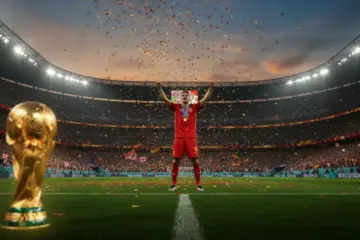
Spain’s national team is meticulously orchestrating the rehabilitation of their prodigious winger Lamine Yamal ahead of the World Cup, prioritizing a cautious approach after his season-ending LaLiga injury. This strategic patience stems from a collaborative framework between FC Barcelona and the coaching staff led by Luis de la Fuente, ensuring the 18-year-old sensation returns not just fit, but primed for peak performance during the tournament’s critical phases. Fans initially fretted over his potential absence, but recent updates paint a picture of calculated optimism, with de la Fuente revealing a comprehensive roadmap designed to shield Yamal from premature exposure while maximizing his explosive contributions later on.
The injury, which sidelined Yamal for Barcelona’s remaining domestic fixtures, initially sparked widespread alarm within the Spanish setup. As one of the squad’s most dynamic attackers, his unavailability posed a tangible threat to Spain’s ambitions. Yet, rather than succumbing to panic, the response has been methodical, drawing lessons from past successes and tailoring a programme that addresses physical, nutritional, and psychological facets of recovery. De la Fuente, speaking at his biography launch, emphasized Yamal’s unwavering commitment, underscoring how the young star is immersing himself fully in the process to expedite a safe return.
Delving into Yamal’s Intensive Daily Recovery Regimen
At the heart of this recovery effort is a rigorous, multifaceted daily routine at FC Barcelona’s training facility, blending targeted physical work with holistic support. De la Fuente highlighted Yamal’s dedication, noting that the forward dedicates three full hours to structured sessions daily, complemented by specialized consultations. This isn’t mere rehabilitation; it’s a holistic overhaul aimed at rebuilding resilience from the ground up.
Key components of Yamal’s programme include:
- Extended training blocks: Three hours focused on progressive conditioning to restore match sharpness without overloading the injury site.
- Strength and gym work: Exercises emphasizing core stability, lower-body power, and injury-specific reinforcement to prevent recurrence.
- Physiotherapy interventions: Hands-on treatments and modalities to alleviate inflammation, enhance mobility, and monitor progress closely.
- Nutritional optimization: Tailored meal plans and supplements from a dedicated nutritionist to fuel tissue repair, boost energy levels, and support overall conditioning.
- Mental conditioning sessions: Regular psychologist meetings to navigate the frustrations of injury, build mental fortitude, and visualize successful reintegration into competitive play.
This comprehensive structure exemplifies contemporary sports science, where recovery is treated as a science unto itself. Every element is interlinked—physical gains bolster mental confidence, while nutritional precision accelerates healing—creating a synergistic effect that positions Yamal for optimal readiness. De la Fuente’s praise for Yamal’s 24/7 focus reveals a maturity beyond his years, transforming potential downtime into a launchpad for excellence.
Lessons from Dani Olmo: The Model for Yamal’s Return
A pivotal influence on this strategy is the precedent set by Dani Olmo during the prior UEFA European Championship. Olmo entered that tournament nursing a serious knock, teetering on the edge of exclusion, yet he evolved into a game-changer in the knockout rounds. De la Fuente referenced this directly, explaining how limited minutes from Olmo proved invaluable, delivering clutch moments that propelled Spain forward.
Applying this blueprint to Yamal involves a similar phased reintroduction, starting with substitute appearances to use his speed and flair in short bursts. The rationale is compelling: 20 minutes of high-intensity Yamal can dismantle defences more effectively than a full 90 from a compromised version, minimizing re-injury risk while preserving his explosive edge. This approach acknowledges the World Cup’s marathon nature, where early group games serve as tune-ups and true tests emerge in the eliminators.
De la Fuente elaborated on the philosophy: players like Yamal offer disproportionate value even in cameo roles, capable of shifting momentum instantaneously. By emulating Olmo’s path, Spain aims to replicate that alchemy, ensuring Yamal’s unique dribbling, vision, and finishing align with the moments that define glory.
Strategic Timeline and Match-by-Match Projections
The recovery timeline is fluid yet purposeful, calibrated to Yamal’s progress and Spain’s fixture demands. Pre-tournament friendlies against Iraq and Peru are designated purely for rehab continuation, bypassing any on-pitch risk. The World Cup opener versus Cape Verde marks a tentative benchmark for limited involvement, likely a late substitution to test responsiveness under lights.
Subsequent group encounters, including the clash with Saudi Arabia, provide flexibility—if caution prevails, Yamal could debut there instead, building minutes incrementally. The true zenith targets the knockout stages, where full fitness would slot him into the starting lineup, unleashing his talents when stakes soar.
This scheduling isn’t arbitrary; it’s rooted in squad versatility and tournament dynamics. Spain’s depth in attack allows rotation early, conserving Yamal for high-use scenarios. Bullet-pointed projections clarify expectations:
- Friendlies (Iraq, Peru): Rehab priority—no minutes anticipated.
- Group opener (Cape Verde): Bench role with 15-25 minutes possible if benchmarks met.
- Second group game (Saudi Arabia): Potential starter if prior outing succeeds, or extended sub stint.
- Knockouts: Peak deployment, targeting 60-90 minutes as conditioning peaks.
Such adaptability empowers de la Fuente to respond dynamically, prioritizing Yamal’s wellbeing over rigid timelines.
Club-Nation Synergy and Risk Mitigation Principles
Underpinning this endeavour is exemplary harmony between FC Barcelona and the Spanish federation, transcending typical club-versus-country tensions. Both entities concur on safeguarding Yamal’s future, given his status as a cornerstone asset at just 18. This alignment manifests in shared medical data, synchronized training protocols, and mutual veto power on risky decisions.
Four core principles drive this restraint:
- Sustained career preservation: Precipitous play could precipitate setbacks derailing years of potential.
- Tournament-phase prioritization: Knockouts demand stars; group stages test depth.
- Empirical validation: Olmo’s triumph validates the gradual model empirically.
- Resource abundance: Abundant options enable phased absence without vulnerability.
This framework not only hedges risks but amplifies Yamal’s projected impact, positioning Spain to use his gifts precisely when victory hinges on brilliance.
In summation, Spain’s orchestration for Yamal embodies prudence fused with ambition. His disciplined rehab, modelled on proven paths, promises a World Cup narrative of triumphant resurgence—limited cameos evolving into starring roles, culminating in the pressure cooker of knockouts. If executed flawlessly, Yamal won’t merely participate; he’ll illuminate the global stage.